How to Fix Vinyl Plank Floor Gaps
Vinyl plank (LVP) floors are durable and waterproof, but their click-lock joints can separate over time. Here's how to close the gaps without tearing up your floor.
Types of LVP Floor Gaps
Not all vinyl plank gaps are the same. The type determines the fix:
End Gaps (Short Edge)
Gaps between the short ends of two planks in the same row. These are the most common and the easiest to fix — the plank just needs to slide lengthwise back into its neighbor.
Best fix: Suction cup tool. Attach, tap, done.
Side Gaps (Long Edge)
Gaps along the long edge between two rows of planks. These are trickier because the click-lock mechanism runs along this edge. If the gap is small, the lock may still be partially engaged.
Best fix: For small side gaps, a suction cup tool can often close them. For wide side gaps where the lock has fully disengaged, you may need to lift and re-click the plank.
Wall Gaps
Gaps between the last row of planks and the wall. These are usually hidden by baseboards and aren't a problem unless your baseboards are too narrow to cover them.
Best fix: These are intentional expansion gaps. If they're visible, use wider baseboards or quarter-round molding to cover them.
Fix End Gaps in 3 Steps
Clean the gap area
Vacuum or brush out any debris trapped in the gap. Wipe the plank surface clean and dry — the suction cup needs a clean surface to grip.
Attach the suction cup
Place the suction cup on the plank you want to move (the one closest to the wall). Press down firmly and lock it. For textured LVP, use a silicone grip pad between the cup and the floor.
Tap the plank closed
Using a rubber mallet, tap the suction cup's tapping block in the direction of the gap. The plank slides into its neighbor and the click-lock re-engages. Unlock and remove.
LVP-specific tip: Vinyl plank is softer than laminate, so it needs less force. Start with light taps and increase gradually. Heavy hits aren't necessary and can deform the plank edge.
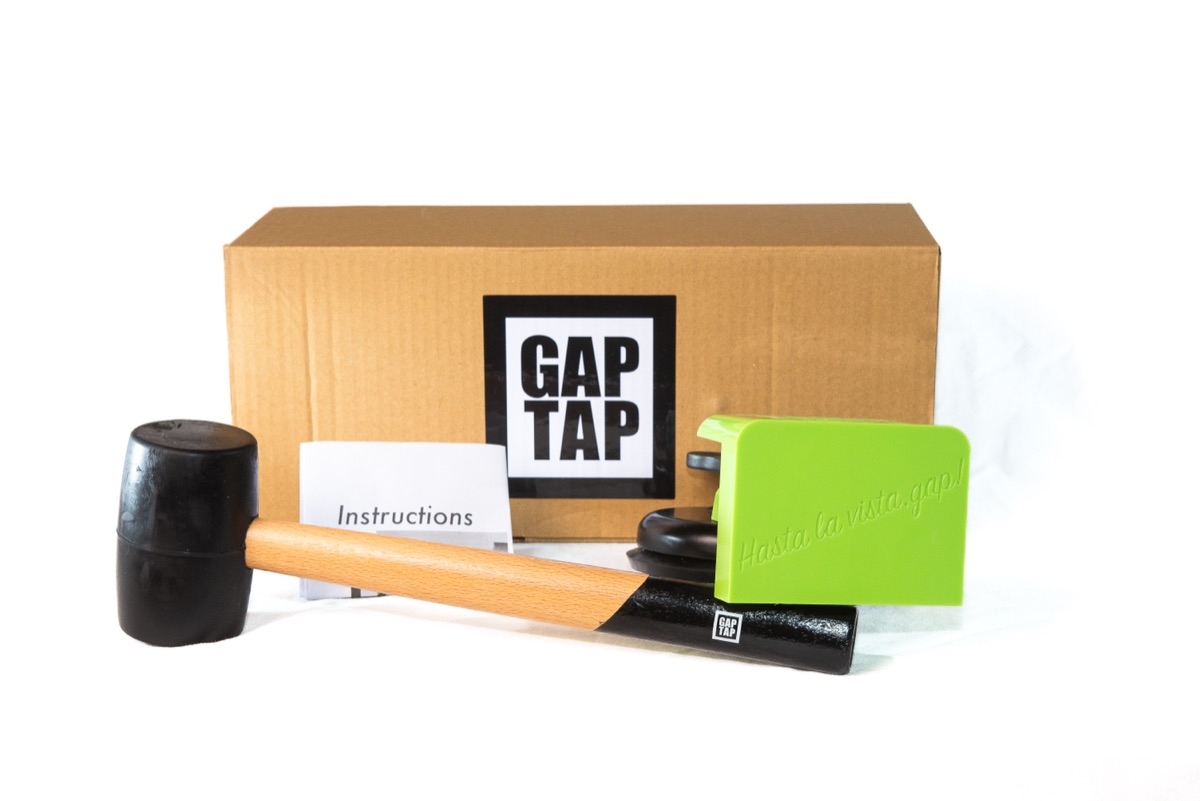
The Gap Tap kit is the suction cup and non-scratch mallet used in these three steps — sized for LVP and laminate planks. $42.99, free shipping.
Why LVP Gaps Happen
Vinyl plank flooring is especially sensitive to temperature:
- Direct sunlight — Sun-heated LVP can expand significantly, then contract when it cools, creating gaps. Rooms with large south-facing windows are most affected.
- Cold rooms — Basements, garages, and rooms over unheated spaces see more contraction and more gaps.
- Dragging furniture — Moving heavy items across LVP can pull planks apart. Always lift furniture instead of dragging it.
- Rolling chairs — Office chairs with hard casters apply repeated directional force that gradually separates planks. Use a chair mat.
Don't use filler or caulk on LVP. Unlike laminate, vinyl plank expands and contracts more with temperature. Filler will crack and separate as the gap moves. The correct fix is to physically close the gap by sliding the plank back into position.
Prevention Tips for LVP
- Keep room temperature steady — 65-85°F is the recommended range for LVP. Avoid letting rooms get very cold overnight.
- Use window coverings — Blinds or curtains on south-facing windows reduce thermal cycling from direct sun.
- Lift, don't drag — Always lift furniture when moving it across LVP. Use felt pads under furniture legs.
- Chair mats for offices — Protect LVP from rolling chair casters with a hard floor chair mat.
- Check expansion gaps — Ensure 1/4" clearance around all walls and fixed objects.
Fix LVP Gaps in Seconds
Gap Tap's suction cup grips vinyl plank surfaces securely. Tap the plank back into place with the non-scratch mallet. No damage to your waterproof floors.
Get Gap Tap — $42.99